
18122-75/1
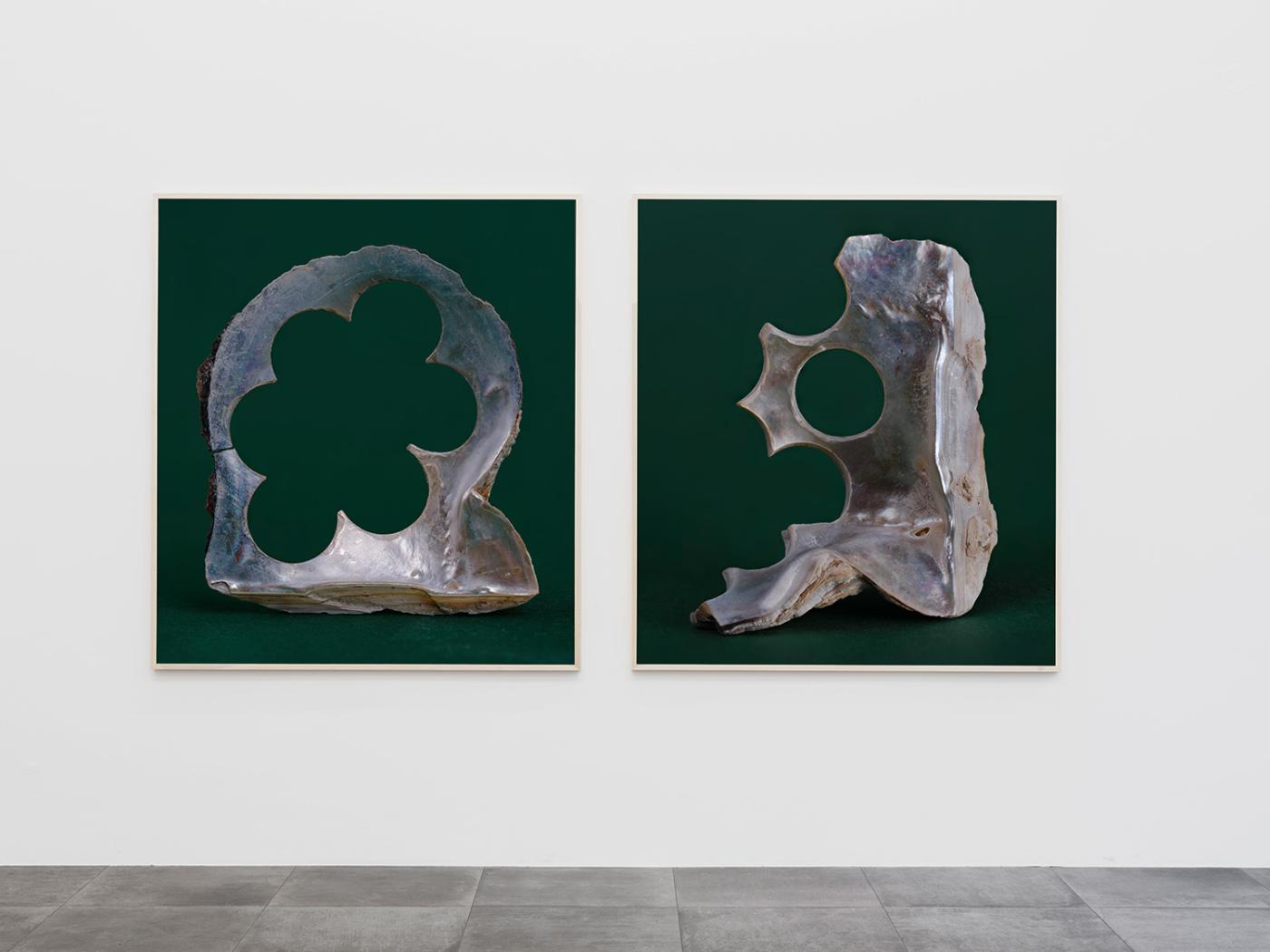
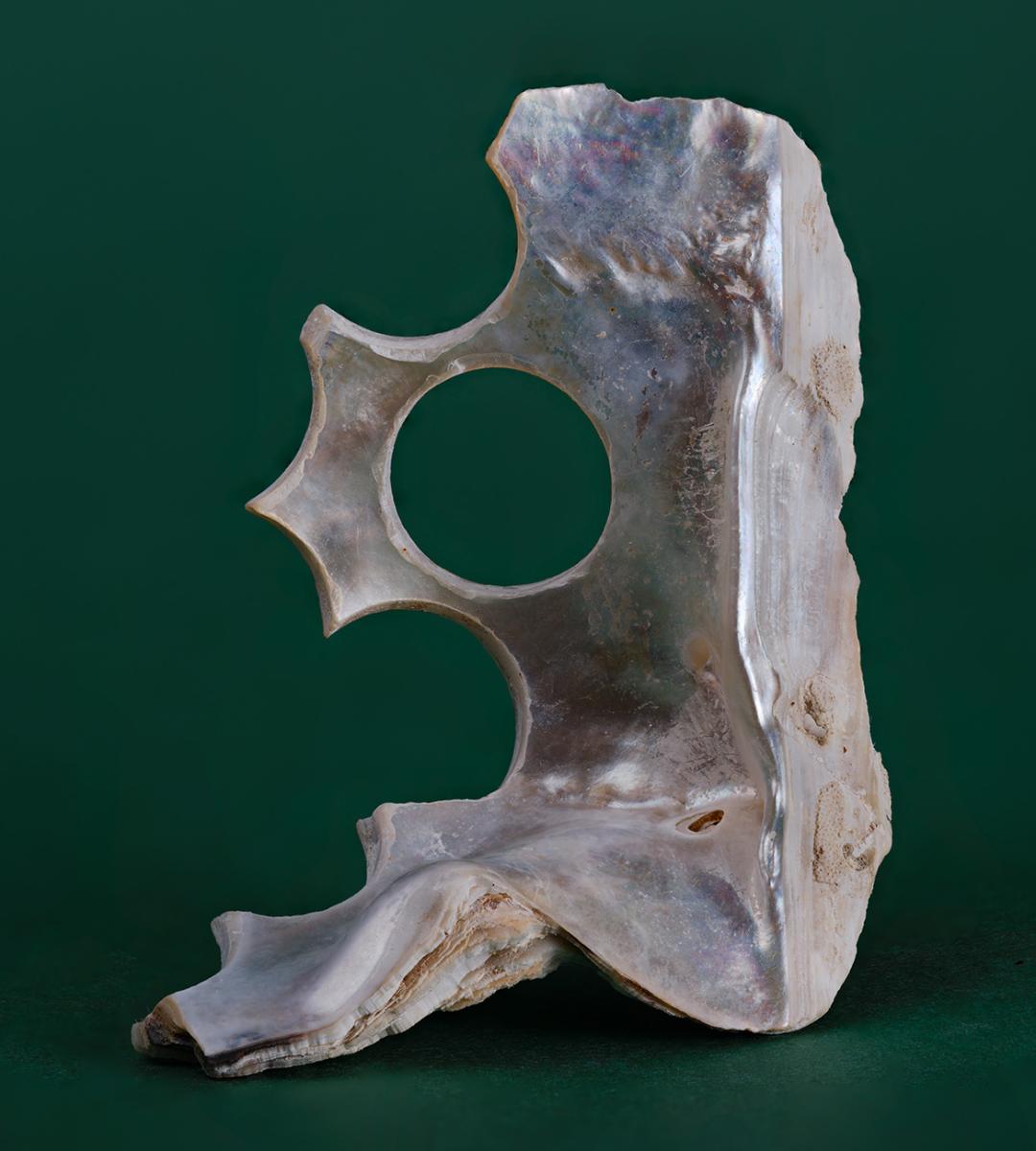
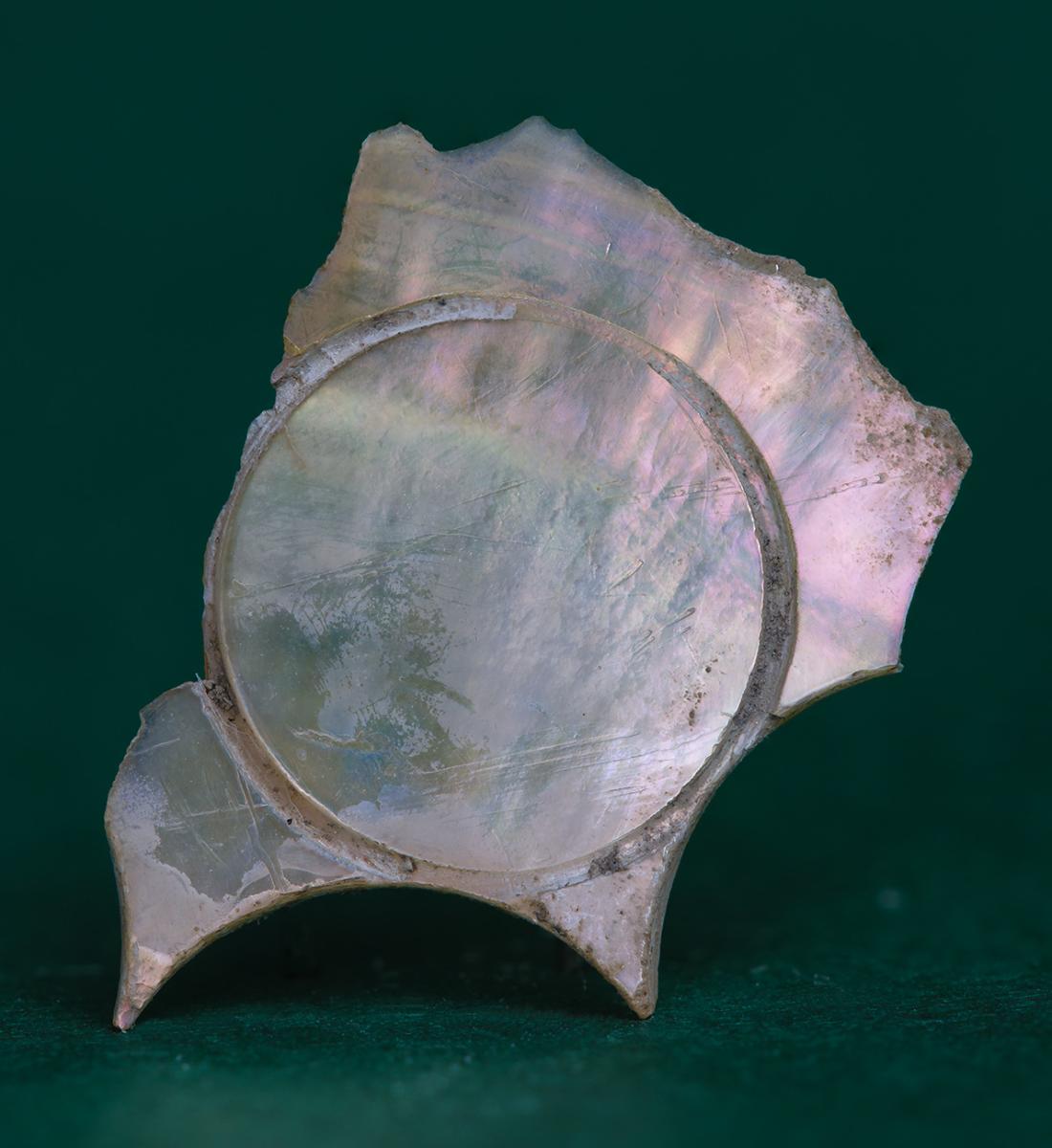
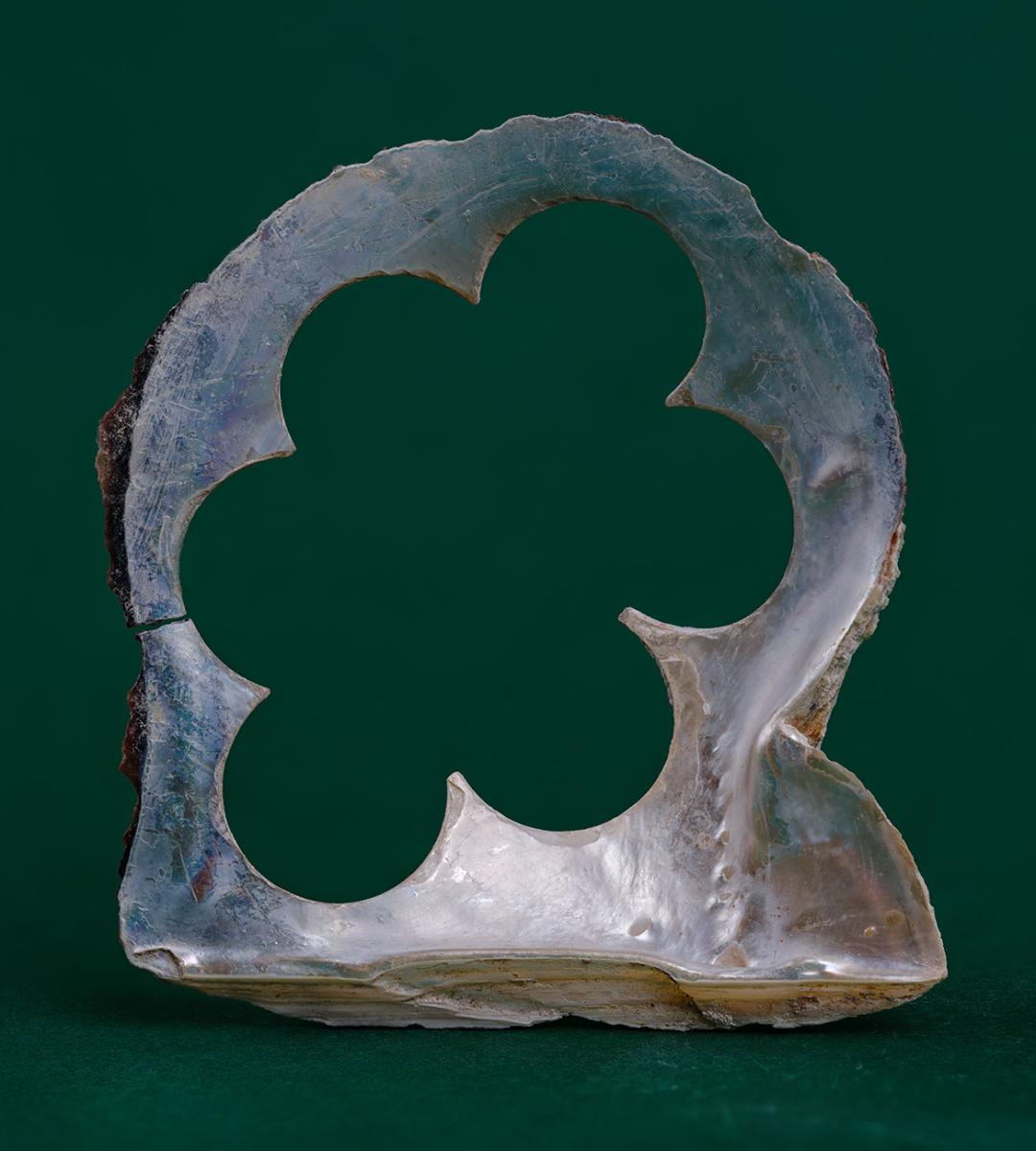
Fotografie, Pigment print, auf Alu kaschiert, gerahmt
je
152 x137 cm, Edition 2 x 1 A.P.
und
61,5 x 56,5 cm, Edition 3 + 1 A.P.
Die Aufnahmen zeigen die Reste von Muschelschalen aus Indonesien, gefunden unter den Dielen eines alten Bauernhauses im nördlichen Weinviertel. Hinter dem Zahlencode des Titels verbirgt sich die Katasterkennung des Fundortes dieser Artefakte, die im Original etwa zwischen einem und sechs Zentimeter groß sind. Sie waren das Rohmaterial für die, im letzten Jahrhundert, oftmals in Heimarbeit geleistete Perlmuttknopfherstellung - heute sind sie Relikte einer verschwundenen Ökonomie.
In der vorgenommenen fotografischen Vergrößerung um das etwa 30-fache treten die feinen Lebensspuren der Muscheln mit ihren Schichtungen und Ablagerungen zutage, kontrastiert von den maschinellen Ausbohrungen der Rohlinge für Knöpfe. Die hierfür angewandte Aufnahmetechnik des Focus Stacking wiederholte gewissermaßen die Schichtenbildung der Perlmuttschalen: Für die durchgehende Schärfe der Motive wurde jedes Artefakt mit weit mehr als einhundert Aufnahmen in seinen Schärfenebenen abgetastet und dann zu einer Aufnahme zusammengesetzt.
Als Überbleibsel eines Produktionsprozesses erzählen diese Spuren nicht nur von manueller Arbeit und der Ausbeutung natürlicher Ressourcen, sondern auch von einer Landschaft als Palimpsest: einem Ort, an dem sich regionale Geschichte und globale Warenströme kreuzen, überlagern, einprägen. In der Arbeit sedimentiert sich Geschichte, Ökonomie, Natur zu einer Erzählung, einer Chronosequenz einer Gegend, in der lokale Arbeitsbiografien mit globalen Extraktivismen verwoben sind und das Lokale nicht als Kulisse, sondern als Archiv globaler Zusammenhänge erscheint.
The images show the remains of seashells from Indonesia, discovered beneath the floorboards of an old farmhouse in the northern Weinviertel region. The numerical code in the title conceals the cadastral identification of the site where these artifacts were found. In their original form, they measure roughly between one and six centimeters. They once served as raw material for mother-of-pearl button production-often carried out as cottage industry work during the last century-and now remain as relics of a vanished economy.
In the approximately thirtyfold photographic magnification, the delicate traces of life within the shells-their layers and deposits-become visible, contrasted by the mechanical drill holes used to extract blanks for buttons. The photographic technique applied here, focus stacking, in a sense repeats the layering process of the shells themselves: to achieve consistent sharpness across the entire motif, each artifact was scanned in its focal planes with well over a hundred individual shots, which were then merged into a single image.
As remnants of a production process, these traces speak not only of manual labor and the exploitation of natural resources, but also of a landscape as palimpsest: a place where regional history and global flows of goods intersect, overlap, and imprint themselves. Within the work, history, economy, and nature sediment into a narrative-a chronosequence of a region where local working lives intertwine with global extractivisms, and the local appears not as a backdrop but as an archive of global interconnections.